Blog → Guide to Tasting Menus
Guide to Tasting Menus: What to Expect, What It Costs, and How to Order
By DarfarMenu Editorial Team · Digital Strategy Specialist · F&B consultant
Published July 29, 2026
The menu arrives, and there is nothing to order.
No appetizers, no entrees, no prices next to individual dishes — just a single number at the bottom and a list of ingredients you half recognize. For a lot of people, that is the exact moment a tasting menu stops feeling like a treat and starts feeling like a test. How many courses is this? How long will it take? What does that number actually cover? And is it rude to say you do not eat sea urchin?
Here is the frustrating part: tasting menus are one of the most rewarding ways to eat, and the confusion is almost entirely about format, not food. The kitchen has already made every decision for you. Once you understand how the format works — the pricing, the pacing, the pairings, and the small handful of things you actually control — the intimidation disappears and you are left with what the restaurant intended, which is a very good night.
So let us take the mystery out of it. Here is everything worth knowing before you book, sit down, and hand the evening over to the chef.
What a Tasting Menu Actually Is
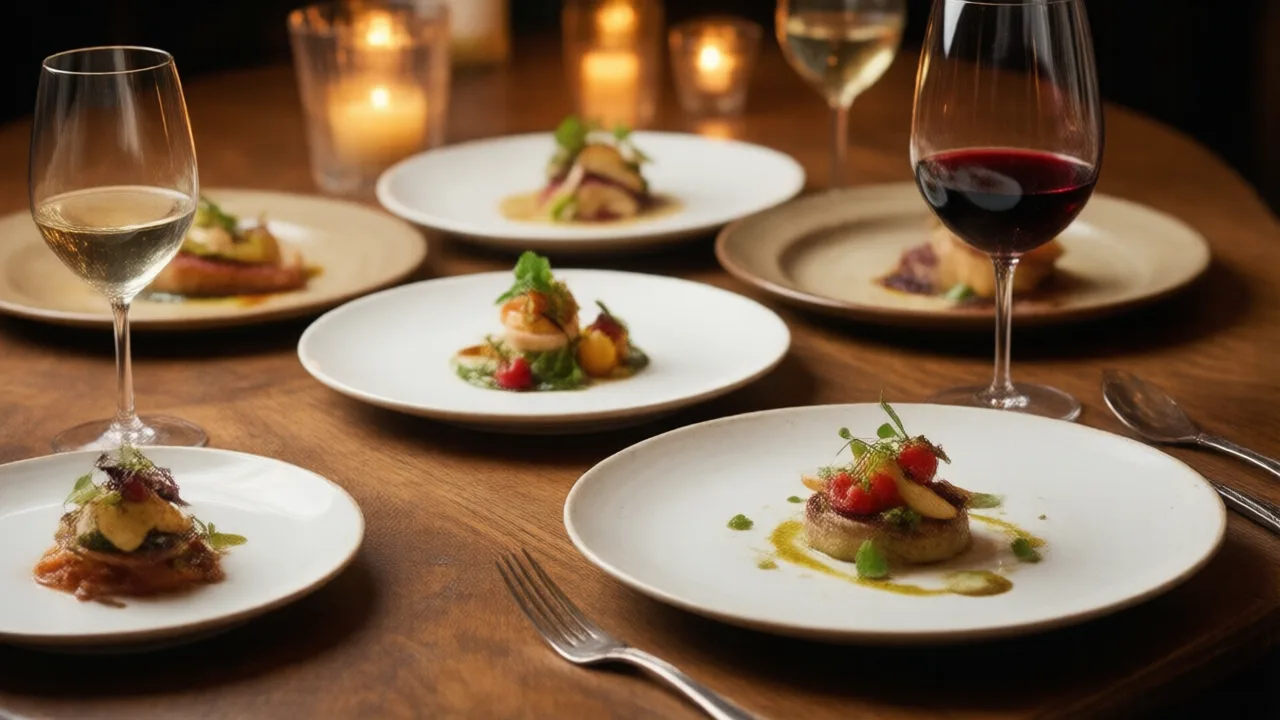
A tasting menu — sometimes called a menu dégustation or a chef’s tasting — is a fixed sequence of small courses, chosen by the kitchen, served in a deliberate order for one set price. Instead of a full-size entree, you get many smaller plates, each built to show off a single ingredient, technique, or idea. A five-course menu might move from a cold seafood bite to a warm vegetable course, a pasta or grain, a fish, a meat, and a dessert. A longer menu simply adds more steps between those beats.
The defining trait is that you are not really ordering — you are opting in. The chef sets the progression the way a director sets scenes, so flavors build from light to rich and back down to something sweet. That is why substitutions are limited: pulling one course out can throw off the arc of the whole meal, the way cutting a scene changes a film.
Tasting menus come in a few common sizes. Short ones run four to six courses and read as an elevated dinner. Mid-length menus of seven to ten courses are the classic fine dining format. Grand tasting menus of twelve to twenty-plus courses are an event in themselves, often built around a chef’s signature dishes and reserved for special occasions.
What It Costs — and Why
Price is the first thing people want to know, and the honest answer is that it varies more than any other kind of restaurant meal. Most tasting menus land between $75 and $250 per person for the food alone, with the bulk of strong, well-reviewed restaurants sitting in the $95 to $175 window. Destination restaurants with national reputations can run $300 or more, and a rare few push past $500.
Why the spread? A tasting menu is expensive to produce. The kitchen buys premium ingredients in small quantities, preps far more components per guest than a standard entree requires, and runs a higher staff-to-table ratio to plate and serve a dozen precise courses. Restaurants build these prices working backward from food cost and labor, the same disciplined math behind every menu — you can see how that pricing logic works in this menu pricing calculator if you are curious what sits behind the number.
Then come the add-ons, which is where budgets get blown. A beverage pairing typically adds 50 to 100 percent on top of the food price. Tax and a service charge — increasingly built in at 18 to 22 percent — land on top of that. The practical rule: to know your real out-the-door cost, take the headline menu price and roughly double it if you plan to add a pairing and tip. A $125 menu becomes a $250-ish evening per person once the wine and service are in.
How Long It Takes — Plan the Whole Night
The single most common tasting-menu mistake is treating it like a normal dinner you can squeeze in before a show. It is not. A typical five- to nine-course menu runs two to three and a half hours. A short four- to five-course menu can be done in 90 minutes to two hours, but a grand menu can easily stretch past four.
That length is a feature, not a delay. The pacing gives each course room to land and gives you time between plates to talk, sip, and reset your palate. Fight it — by rushing the staff or watching the clock — and you undercut the entire point. So clear the evening. Do not book a 6:00 tasting menu and 8:30 tickets. Arrange your ride home for late. And eat a light snack in the afternoon so you arrive hungry but not ravenous, because those first few small courses are not going to fill you until the meal builds.
The Handful of Things You Actually Control
You surrender most decisions to the kitchen, which is the joy of it. But a few moves genuinely improve your night, and every one of them happens before or at the start of the meal.
Disclose restrictions when you book
Allergies, diets, and hard dislikes go in the reservation notes and again 24 to 48 hours ahead. The kitchen preps a fixed sequence in advance, so lead time is everything.
Choose your pairing level up front
Full pairing, half pairing, one bottle, or nothing — decide early so the sommelier can plan pours around your courses instead of scrambling mid-meal.
Pace your own drinking
Pairing pours are small but they add up across ten courses. Sip, do not drain, and keep water moving so course twelve tastes as sharp as course two.
Ask questions between courses
Servers at these restaurants love to explain a dish. A short question about an ingredient or technique turns a plate you do not recognize into the best bite of the night.
Say yes to the unfamiliar
The course you would never order is exactly why you came. The chef put it there on purpose. Trust the sequence and eat things in the order they arrive.
Wine Pairings, or Order Your Own?
The beverage pairing is the tasting menu’s signature upsell, and it is genuinely worth it — when you want it. Each pour is chosen for a specific course, so the sommelier is doing the same curatorial work the chef is, matching acidity, weight, and intensity plate by plate. Done well, a pairing teaches you more about how food and wine interact in one evening than a dozen ordinary dinners.
But it is not the only path. You can decline the pairing and order a single bottle that carries you across the meal, pick a couple of by-the-glass selections, or drink nothing at all without a hint of judgment at a good restaurant. If the full pairing feels steep, ask about a half pairing or reduced pours — many kitchens offer one quietly. And if you would rather steer your own bottle, the same instincts that keep you from overpaying anywhere apply here; our guide to reading a restaurant wine list without overpaying covers the exact phrasing that gets you a great bottle at the price you had in mind.
Dietary Restrictions and Allergies
This is the area where diners worry most and need to worry least — provided they communicate. Because tasting menus are planned rather than ordered, a good kitchen can nearly always rework the sequence around an allergy, a vegetarian or vegan diet, or a religious restriction. Many fine dining restaurants run a full vegetarian tasting menu in parallel with the standard one.
The catch is timing. Tell them when you book, confirm a day or two ahead, and remind your server when you sit down. What kitchens cannot do gracefully is improvise around a serious allergy revealed as the second course lands. Give notice and you will be looked after beautifully; spring a surprise and you strain the one format built entirely on advance planning. If eating out with restrictions is a regular challenge for you, our food allergy dining guide goes deeper on how to communicate them clearly at any restaurant.
Tasting Menu vs. Prix Fixe vs. À la Carte
These three terms get muddled constantly, and the difference is really about how much you choose and how long you sit.
- À la carte is the standard format: you order each dish individually and pay per item. Maximum choice, fastest pace, most familiar.
- Prix fixe is a fixed price for a set number of courses, usually with a few options per course. You still choose, but within guardrails, and it moves faster than a tasting menu.
- Tasting menu is the chef’s full curation: many small courses, one price, little or no choice, eaten in a set order over a longer evening.
If you like the fixed-price idea but want more control and a shorter meal, prix fixe is the sweet spot — our companion guide to prix fixe menus breaks down when that format is a genuine deal and when it is not.
Tipping and Etiquette
Check your bill before you calculate a tip, because many tasting-menu restaurants now include a service charge of 18 to 22 percent automatically — and a few high-end rooms have moved to a fully inclusive model where no additional tip is expected at all. If service is included, an extra 3 to 5 percent for exceptional work is generous but never required. If it is not included, tip 20 percent on the pre-tax total the way you would anywhere, remembering that these meals involve far more service touches than a normal dinner.
The etiquette beyond tipping is mostly common sense: arrive on time, since a delayed table can push the kitchen’s carefully timed sequence out of rhythm; keep phones down so you are present for a meal you are paying a premium to experience; and tell your server honestly if something is not working, because they would much rather adjust than have you quietly disappointed.
So, Is It Worth It?
A tasting menu is worth it when you want the meal to be the event — an anniversary, a milestone, a night built around the food itself rather than a stop before something else. You are paying for craft, sequence, and the experience of eating exactly what a talented kitchen most wants to serve, in the order it wants to serve it. That is a different thing from a great entree, and on the right night it is unforgettable.
It is the wrong call when you are hungry-now, on a clock, or would genuinely rather choose your own dishes. There is no shame in that; it just means an à la carte or prix fixe night suits you better this time.
Either way, the move is the same: decide what kind of evening you want first, then pick the format that serves it. When you are ready to find the restaurant — tasting menu or otherwise — that is the easy part.
Ready to book your next great meal?
Browse local restaurant menus and order directly — zero commission fees
Frequently Asked Questions
How much does a tasting menu cost?
Most tasting menus run between $75 and $250 per person for the food alone, with the majority of well-reviewed restaurants sitting in the $95 to $175 range. High-end destination restaurants can charge $300 or more. A wine or beverage pairing usually adds 50 to 100 percent on top of the food price, and tax and service push the final total higher still, so budget roughly double the menu’s headline number if you plan to add pairings and tip.
How long does a tasting menu take?
Plan for two to three and a half hours for a typical five to nine course menu. A short four to five course menu can run 90 minutes to two hours, while a grand 12 to 20 course experience at a fine dining destination often runs three to four hours or more. Ask the restaurant when you book, avoid scheduling anything tight afterward, and treat the meal as the whole evening rather than a stop along the way.
Can you do a tasting menu with dietary restrictions or allergies?
Almost always, but you must tell the restaurant in advance, ideally when you book and again 24 to 48 hours before. Because tasting menus are planned and prepped as a fixed sequence, the kitchen needs lead time to rework or substitute courses. Serious allergies, vegetarian or vegan diets, and religious restrictions can nearly always be accommodated with notice. Walking in with an undisclosed restriction is the one thing that genuinely strains the format.
What is the difference between a tasting menu and a prix fixe?
A prix fixe is a fixed price for a set number of courses where you usually choose from a few options per course. A tasting menu is a curated sequence of many small courses chosen entirely by the chef, designed to be eaten in a specific order with little or no substitution. Tasting menus are generally longer, more expensive, and more of a set performance, while prix fixe gives you more choice and moves faster.
Do you have to get the wine pairing?
No. The pairing is optional and often adds as much as the food itself. It is a genuinely great experience because each pour is chosen for a specific course, but you can decline it and order a single bottle, a couple of by-the-glass selections, or nothing at all. If the pairing feels steep, ask whether a half pairing or a reduced pour option exists, since many restaurants offer one without advertising it.