Blog → How to Find Hidden Gem Restaurants
How to Find Hidden Gem Restaurants: 12 Proven Strategies That Beat the Algorithm
Stop eating at the same overrated spots everyone else finds on page one. Here are the real strategies food obsessives use to discover restaurants you will never see in a sponsored post.
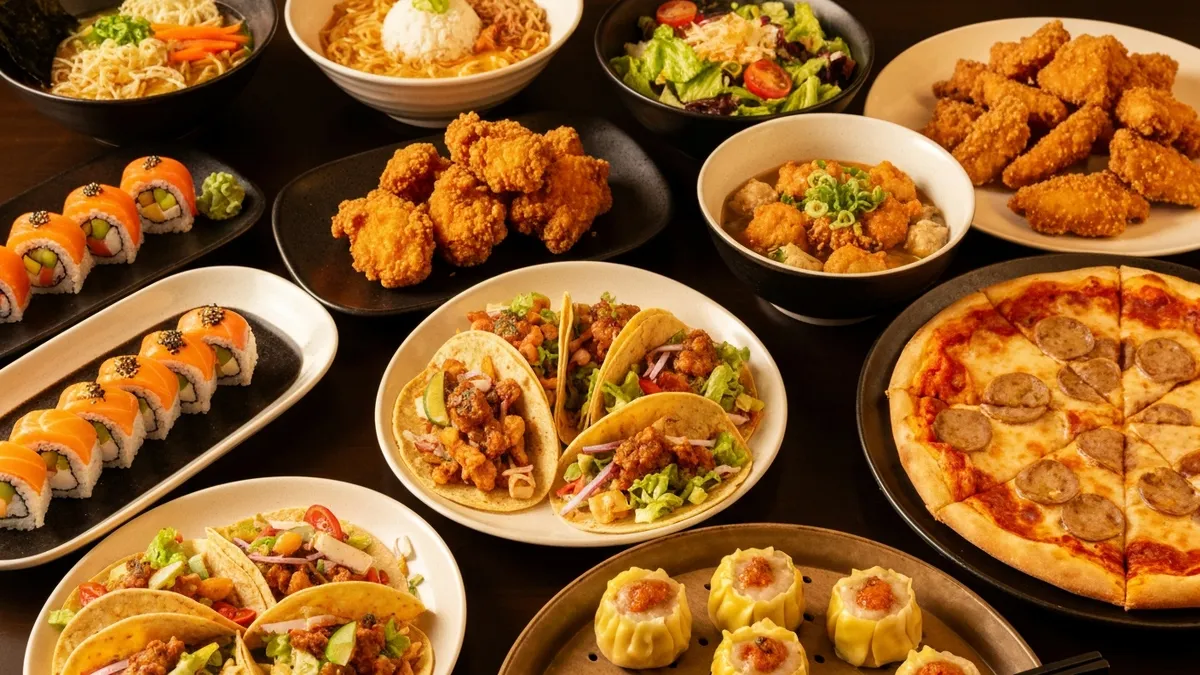
You are standing on a sidewalk in a city you have visited a dozen times, staring at the same three restaurants that every "best of" list recommends. The wait is 45 minutes. The food is fine. And somewhere three blocks away, a family-run Oaxacan kitchen is serving mole that took 22 hours to prepare — to a dining room with open tables.
This is the hidden gem problem. Not that great restaurants do not exist, but that our discovery tools are broken. Google prioritizes businesses that pay for ads. Yelp rewards volume over quality. Instagram favors photogenic plating over actual flavor. The result? The same 15% of restaurants capture 80% of the attention, while thousands of extraordinary spots stay invisible.
But here is the thing — finding those places is not luck. It is a skill. And like any skill, it can be learned.
After 12 years covering the restaurant industry and eating my way through 40+ cities, I have developed a systematic approach to finding hidden gems that works whether you are in your hometown or arriving somewhere brand new. These are the same strategies used by food writers, restaurant scouts, and the annoyingly well-fed friend in your group chat who always knows where to eat.
Let me show you exactly how it works.
1. Follow the Lunch Crowd, Not the Dinner Hype
The single most reliable hidden gem indicator is a packed lunch service in an area dominated by offices or hospitals. Here is why: lunch customers are repeat customers. They eat at the same place three to four times a week. They are spending their own money on a tight schedule. They cannot afford to waste either on bad food.
A restaurant that fills 40 seats every weekday between 11:30 and 1:00 is generating roughly $2,800 to $3,500 in daily lunch revenue — enough to sustain the business without ever needing a single tourist or Instagram post. These places optimize for speed, consistency, and value. The food is almost always excellent.
How to execute this: Drive through commercial districts, hospital corridors, and university neighborhoods between 12:00 and 12:30 on a Tuesday. Look for full parking lots at places with no visible signage budget. That Salvadoran spot with the hand-painted sign and 30 cars outside? That is your target.
2. Use Google Maps Like a Professional Food Scout
Most people search Google Maps for "restaurants near me" and pick from the top results. That is the equivalent of reading only the headline of every article. The real power is in the filters.
Open Google Maps in any neighborhood and search "restaurant." Now look for pins with ratings between 4.4 and 4.8 that have fewer than 300 reviews. This sweet spot — high rating, low review count — is where hidden gems live. A 4.6 rating with 180 reviews means consistent quality without mainstream discovery.
Next, zoom in to residential neighborhoods and look for isolated restaurant pins. A single restaurant pin in a sea of houses almost always indicates a neighborhood institution that survives entirely on local loyalty.
Pro tip: Switch to Google Maps satellite view and look for restaurants with surprisingly large parking lots relative to their building size. This signals high volume — the kind that only comes from word-of-mouth reputation.
3. Mine Ethnic Grocery Store Bulletin Boards
This strategy sounds old-fashioned because it is — and it works precisely because algorithms cannot index a paper flyer pinned to a corkboard. Ethnic grocery stores (Korean markets, Mexican supermarkets, Indian spice shops, Middle Eastern delis) are community hubs. Their bulletin boards advertise restaurants, catering services, and home cooks that exist entirely outside the digital ecosystem.
A great many immigrant-owned restaurants in the U.S. have no website and little or no presence on major review platforms. These businesses rely on community networks — and the grocery store is the center of that network.
How to execute this: Visit the largest ethnic grocery store in your area. Check the bulletin board near the entrance. Ask the cashier where they eat on their day off. That question alone has led me to some of the best meals of my life.
4. Reverse-Engineer Food Delivery Zones
Here is a technique that most people overlook entirely. Open a direct ordering platform like DarfarMenu or a restaurant's own website and browse restaurants that only deliver to a small radius. Restaurants with tight delivery zones (under 3 miles) are almost always prioritizing food quality over order volume. They know their food does not travel well beyond a certain distance, and they care enough to enforce that limit.
Contrast this with restaurants that deliver across an entire metro area — they are optimizing for volume, and their food arrives lukewarm at best. The small-radius restaurants are the ones worth visiting in person.
5. Ask Chefs, Not Critics
Restaurant critics eat at restaurants. Chefs eat at hidden gems. The distinction matters enormously.
When a professional chef finishes a 12-hour shift, they are not going to a Michelin-starred tasting menu. They are going to the taqueria that stays open until 2 AM, the ramen shop that only seats 12, or the barbecue joint that runs out of brisket by 1 PM. Chefs know food at a molecular level. They can taste technique, ingredient quality, and passion in a single bite. Their recommendations are the most reliable signal in the entire restaurant discovery ecosystem.
How to access this: Follow local chefs on Instagram — not their restaurant accounts, their personal accounts. Watch their stories for where they eat on their days off. If you are at a restaurant and the food is great, ask your server: "Where does the chef like to eat?" You will get gold every single time.
6. Drive the "Wrong" Direction
Hidden gems cluster in areas that most diners drive past, not toward. Strip malls on secondary highways. The commercial block behind the big-box retail center. The neighborhood on the other side of the interstate. These locations have lower rent ($18 to $25 per square foot versus $40 to $60 in trendy corridors), which means operators can spend more on ingredients and less on lease payments.
Restaurants in secondary commercial locations pay far less rent, and many of them put that difference into the food on your plate rather than into the decor.
The strip mall rule: If a strip mall has both an ethnic grocery store and a restaurant of the same cuisine next door, eat there. The grocery store guarantees fresh, authentic ingredients. The proximity is not coincidence — it is a supply chain.
7. Check Who Is Not on Delivery Apps
Third-party delivery platforms charge restaurants 15% to 30% commission on every order. Many of the best restaurants refuse to participate. They would rather have fewer orders at full margin than high volume at a loss. This means the restaurants you cannot find on major delivery apps are often the most quality-focused operators in town.
Search for restaurants in your area that only offer direct ordering through their own websites or phone orders. These operators are making a deliberate quality-over-quantity choice — and that philosophy extends to their food.
8. Read the One-Star Reviews (Seriously)
This sounds counterintuitive, but one-star reviews are the most informative reviews on any platform. Here is what to look for:
- "The portions were too small" — Translation: this restaurant prioritizes quality over quantity. Likely a gem.
- "It was too spicy / too authentic" — Translation: this restaurant does not water down its food for mainstream palates. Definitely a gem.
- "The menu is confusing" — Translation: this restaurant serves cuisine that is unfamiliar to the reviewer. Probably excellent.
- "No English menu" — Translation: the primary clientele shares the cuisine's culture. Almost certainly authentic.
- "Cash only" — Translation: low overhead, family-run, margins going to ingredients. Classic gem signal.
When the one-star complaints are about authenticity, portion expectations, or unfamiliarity — rather than food quality, cleanliness, or service — you have found a hidden gem that simply has the wrong audience leaving reviews.
9. Use Instagram Location Tags, Not Hashtags
Hashtags are gamed. #BestFoodInTown returns sponsored content and influencer posts. Location tags cannot be faked.
Search Instagram for a specific neighborhood name and tap "Places." Browse the tagged photos at small restaurants in that area. Look for posts from regular people (not food bloggers) showing plates of food. The restaurants that appear repeatedly in casual, non-professional photos are the ones locals actually eat at — not the ones paying for promotion.
This works especially well for ethnic cuisines where the local community shares photos in their native language. A Vietnamese restaurant with dozens of Vietnamese-language tagged posts is about as strong a signal as you can get.
10. Time Your Visits Strategically
Hidden gems reveal themselves at specific times. Here is a cheat sheet:
- Weekend breakfast (7-9 AM): The people eating out this early on a Saturday are locals with deep loyalty to the spot. Follow them.
- Tuesday and Wednesday dinners: Restaurants that fill tables on the slowest nights of the week are doing it on food quality alone. No one goes out on a Tuesday for ambiance.
- Late night (after 10 PM): Industry workers — servers, bartenders, chefs — eat after their shifts end. The places that stay open for them are feeding the most demanding palates in the business.
- Sunday afternoon: In many cultures, Sunday lunch is the most important meal of the week. Immigrant-owned restaurants often serve their most traditional, complex dishes on Sunday.
11. Join Local Food Groups (But Filter Ruthlessly)
Every city has Facebook groups, Reddit communities, and Discord servers dedicated to local food. These are goldmines — but you need to learn to filter signal from noise.
Ignore posts that start with "I am looking for..." (these are tourists). Focus on posts that say "I just had the best..." or "Has anyone else been to..." from accounts that post regularly. Long-time members who recommend the same place repeatedly are your most reliable source. Bonus: these communities often know about pop-ups, supper clubs, and home-kitchen operations that have zero online presence elsewhere.
The ability to read a menu strategically becomes even more valuable once you find these spots — many hidden gems have menus designed for regulars, not first-timers.
12. Walk. Just Walk.
The most underrated restaurant discovery tool costs nothing and requires no app. Walk through neighborhoods you have never explored, during meal times, and pay attention to your senses. Follow the smell of charcoal smoke. Notice the restaurant with steam pouring out of the kitchen vent at 11 AM. Watch for the place where people walk out carrying takeout bags and smiling.
Ask people how they found their "favorite hidden gem" and a striking number will tell you they walked or drove past it — not through any digital platform. The physical world is still the best discovery engine we have.
The 15-minute rule: Pick a direction you have never walked from your home or hotel. Walk for 15 minutes. Eat at whatever looks interesting. Do this once a month and within a year you will have a personal list of gems that no algorithm will ever surface.
Putting It All Together: Your Hidden Gem Discovery System
You do not need to use all 12 strategies at once. Here is a practical system that takes less than 30 minutes per week:
- Monday: Spend 10 minutes scanning Google Maps in one new neighborhood (Strategy 2)
- Wednesday: Check one local food group for new recommendations (Strategy 11)
- Weekend: Take one exploratory walk or drive through an unfamiliar area (Strategies 1, 6, 12)
- Monthly: Visit one ethnic grocery store and ask for restaurant recommendations (Strategy 3)
Within three months, you will have a rotation of 10 to 15 restaurants that most people in your city have never heard of. Your dining experiences will improve dramatically. Your restaurant spending may actually decrease — hidden gems tend to offer better value because they are not passing lease premiums and marketing costs through to your bill.
And the best part? Every hidden gem you find and support directly helps a small business survive in an industry where 60% of new restaurants close within their first year. Your adventurous eating is not just good for your palate — it is good for your community.
Now stop reading and go find your next favorite restaurant. It is three blocks away, it has been open for six years, and nobody on your Instagram feed knows about it yet.
Discover Local Restaurants on KwickMenu
Order directly from local restaurants — zero commission fees. Support the hidden gems in your neighborhood.
Explore KwickMenu →Frequently Asked Questions
How do I know if a restaurant is a real hidden gem or just unpopular?
Look for three signals: consistent repeat customers (full parking lot at odd hours), a focused menu (usually under 25 items), and longevity (open for at least 2-3 years). Truly bad restaurants rarely survive past 18 months in most markets. If a place has been around for years with steady traffic but no social media presence, that is almost always a sign of quality.
Are hidden gem restaurants always cheap?
Not necessarily, though many are. Hidden gems span every price range. What defines them is disproportionate quality relative to their visibility — not their price point. A $45 tasting menu at an unmarked warehouse kitchen qualifies just as much as a $7 plate of tacos from a converted gas station. The common thread is that the food outperforms the marketing.
What are the best apps for finding hidden gem restaurants?
Google Maps is surprisingly effective — search for restaurants and sort by rating, then look for high-rated places with fewer than 200 reviews. Yelp's "Newly Added" filter catches spots before they get crowded. Instagram location tags and local food hashtags surface places that do not advertise. Direct ordering platforms like DarfarMenu also surface local restaurants that skip the big delivery apps entirely.
How can I find hidden gem restaurants when traveling?
Ask hotel staff where they personally eat — not what they recommend to guests. Visit the local market or food hall on your first day to scout vendors. Check university and hospital neighborhoods, which tend to have affordable, high-quality spots serving the local workforce. Avoid any restaurant within 200 meters of a major tourist attraction unless a local specifically recommends it.
Why do some great restaurants stay hidden?
Most small restaurant owners are cooks first and marketers never. Most independent restaurant owners spend next to nothing on marketing. Many rely entirely on word of mouth and repeat customers. Others deliberately stay under the radar to maintain quality — higher volume means more staff, bigger kitchens, and compromises they are not willing to make.
Related reading: Healthy Eating Out: Restaurant Tips • Tipping Etiquette Guide 2026 • Family-Friendly Restaurants Guide • Restaurant Menu Trends 2026